

Table of Contents
- Best Budget-Friendly Manual Vaporizers: Quick Comparison
- How We Evaluated These Manual Vaporizers
- 1. The G3, Best Entry-Level Pick at $35
- 2. The BB3, Cooler Vapor, Glass Construction at $49
- 3. The B2, Beginner-Friendly Silicone Stem at $59
- 4. The M 7, Stainless Steel Starter at $89
- Manual Vaporizer Heating Techniques That Get Results
- Long-Term Cost of Ownership and Sustainability
- Frequently Asked Questions
Last Updated: August 30, 2026
The dry herb vaporizer market is growing fast. According to Global Market Insights dry herb cannabis vaporizers forecast, the segment was valued at USD 2.58 billion in 2023 and is projected to expand at a CAGR of 14.6% through 2032, driven largely by consumers moving away from combustion entirely (gminsights.com). At DynaVap, we've spent years engineering battery-free thermal extraction devices at the center of this shift. This guide covers the best budget-friendly manual vaporizers in our lineup for 2026, ranked by price, performance, and long-term value.
Quick Picks:
- Best Overall Entry-Level: The G3 at $35, the most accessible starting point in the DynaVerse
- Best for Cooler Vapor: The BB3 at $49, glass construction with bead cooling built in
- Best for Beginners: The B2 at $59, silicone stem, medium bowl, forgiving draw
- Best Stainless Steel Starter: The M 7 at $89, medical-grade steel, modular, built to last
Best Budget-Friendly Manual Vaporizers: Quick Comparison
Manual vaporizers are thermal extraction devices that use a torch as the heat source instead of a battery. Every model in this list uses DynaVap's signature Captive Cap system: heat the cap, wait for the audible click, inhale. No buttons, no charging, no electronics to fail.

The G3
Flat lay of five DynaVap manual vaporizers arranged side by side on a clean wooden surface, a small single-flame butane torch positioned to the right and a wood grain herb grinder with dried herb nearby, shot under warm natural light
Model |
Price |
Material |
Bowl Size |
Best For |
|---|---|---|---|---|
The G3 |
$35 |
Glass |
0.05g |
First-time buyers, microdosers |
$49 |
Glass + SS tip |
0.1g |
Cooler vapor, flavor-focused |
|
The B2 (Black) |
$59 |
Silicone stem + SS tip |
0.075g |
Beginners, comfortable grip |
The M 7 |
$89 |
Stainless steel |
0.1g |
Durable starter, modular upgrades |
All four are battery-free, made in the USA, and compatible with the same Captive Cap heating system. The differences come down to material, vapor path, and chamber size.
How We Evaluated These Manual Vaporizers
Every device was assessed on build quality relative to price, vapor quality and flavor, ease of use for beginners, and long-term cost of ownership. Manual vaporizers are a category where a $35 device can outperform a $150 battery-powered one on flavor, provided the user understands the heating technique.
What to Look for in a Budget Dry Herb Vaporizer
A cheap conduction-based device with uneven heat distribution will waste more herb per session than a slightly more expensive hybrid-heating design. Over six months, that difference compounds.
Four things decide whether a budget manual vaporizer delivers value:
- Heating method: Conduction heats material through direct contact with a hot surface. Convection pulls hot air through the herb for more even results. Most DynaVap devices use a hybrid of both.
- Chamber capacity and efficiency: A 0.05g microdose chamber means less herb per session. For light users, that's a feature.
- Material safety: Medical-grade stainless steel and borosilicate glass are the only materials worth trusting at the tip and vapor path.
- Repairability and modularity: A device you can disassemble, clean, and swap parts on will outlast any sealed unit. Every DynaVap in this list is modular.
1. The G3, Best Entry-Level Pick at $35
The G3 is the most affordable path into torch-powered dry herb vaping. At $35, it ships as a complete kit: the glass UniBody device, a single-flame Clipper jet torch, and a protective tin case.
The all-glass design delivers noticeably clean flavor because vapor never contacts metal along the vapor path. The built-in glass screen prevents material inhalation, and the 0.05g chamber makes it inherently microdose-ready.
The G3 is not induction heater compatible due to its glass construction, and it's more fragile than stainless steel models. For home use or careful outdoor sessions, that's manageable at this price point.
Best for: Anyone new to DynaVap who wants a complete, cost-efficient starter kit with exceptional flavor clarity.
Pros:
- Lowest price at $35
- Complete kit includes torch and case
- All-glass vapor path for clean flavor
- Microdose-ready 0.05g chamber
Cons:
- Glass construction requires careful handling
- Not compatible with other DynaVap Parts
2. The BB3, Cooler Vapor, Glass Construction at $49
The BB3 features three blue beads and internal divots inside the glass midsection that actively cool vapor before it reaches the mouthpiece. The result is a noticeably smoother draw, particularly on second and third heat cycles.
The BB3 pairs a glass stem with a stainless steel tip and DynaVap's Captive Cap. The 10mm female fitting means it connects directly to most water pieces without an adapter.
Best for: Users who find dry vapor harsh and want cooler draws without spending more than $49. Also ideal for water piece users.
Pros:
- Bead-cooling system produces noticeably cooler vapor
- 10mm water piece compatible
- Adjust-a-Bowl feature for microdosing
Cons:
- Glass stem requires careful handling
3. The B2, Beginner-Friendly Silicone Stem at $59
The B2 solves a real problem for new users: the learning curve of rotating a metal device while applying torch heat. The silicone stem makes the B2 easier to grip and rotate during the heat cycle, reducing the risk of scorching.

The B2
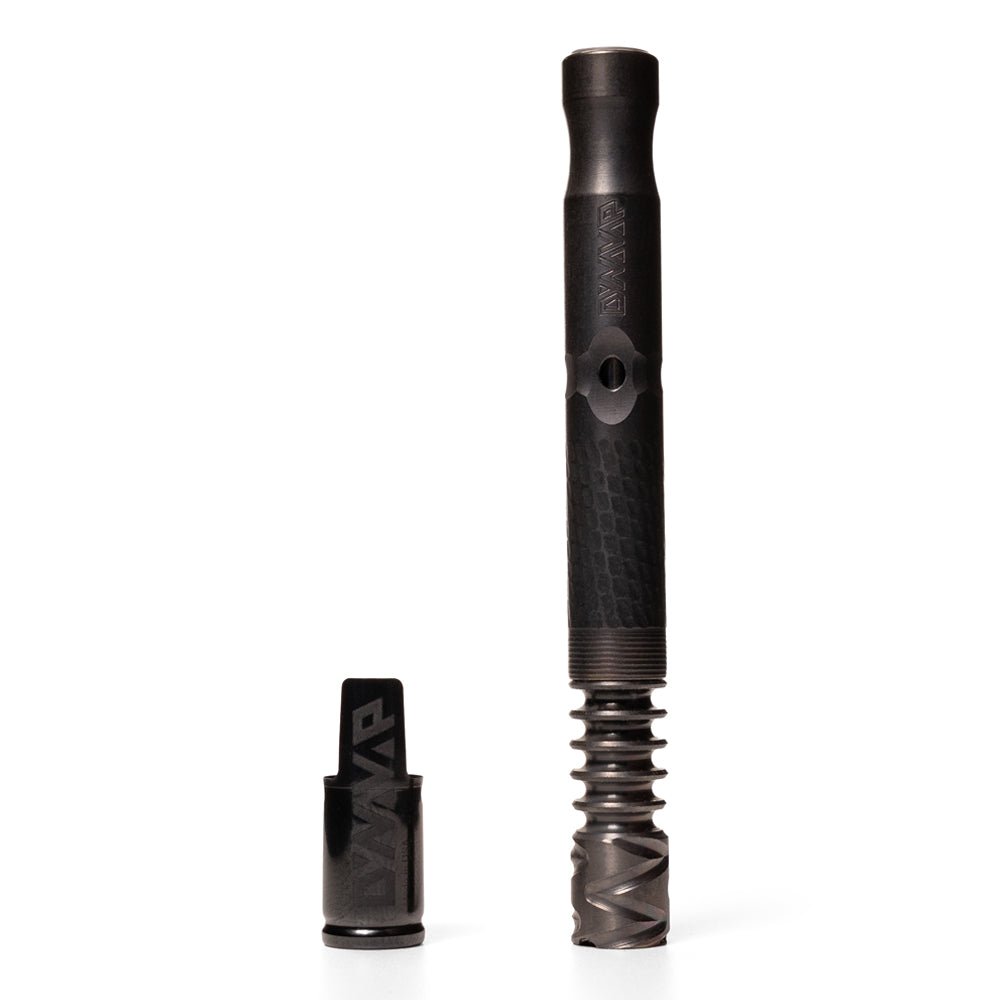
The B2 uses a stainless steel tip with a 0.075g bowl, larger than the G3's 0.05g chamber and better suited to users who want a fuller session. The 10mm tapered mouthpiece fits standard bong openings, and the modular design is compatible with all DynaVap tips and The Wand induction heater if the user upgrades later.
Available in Black ($59), the B2 ships with a DynaTorch and Tin carrying case.
Best for: New users transitioning from smoking who want a forgiving, comfortable grip and a larger bowl size.
Pros:
- Silicone stem is easier to grip and rotate during heating
- Larger 0.075g bowl for fuller sessions
- Compatible with induction heaters
- Modular, upgradeable with any DynaVap tip
Cons:
- Some wear can happen on the silicone stem
4. The M 7, Stainless Steel Starter at $89
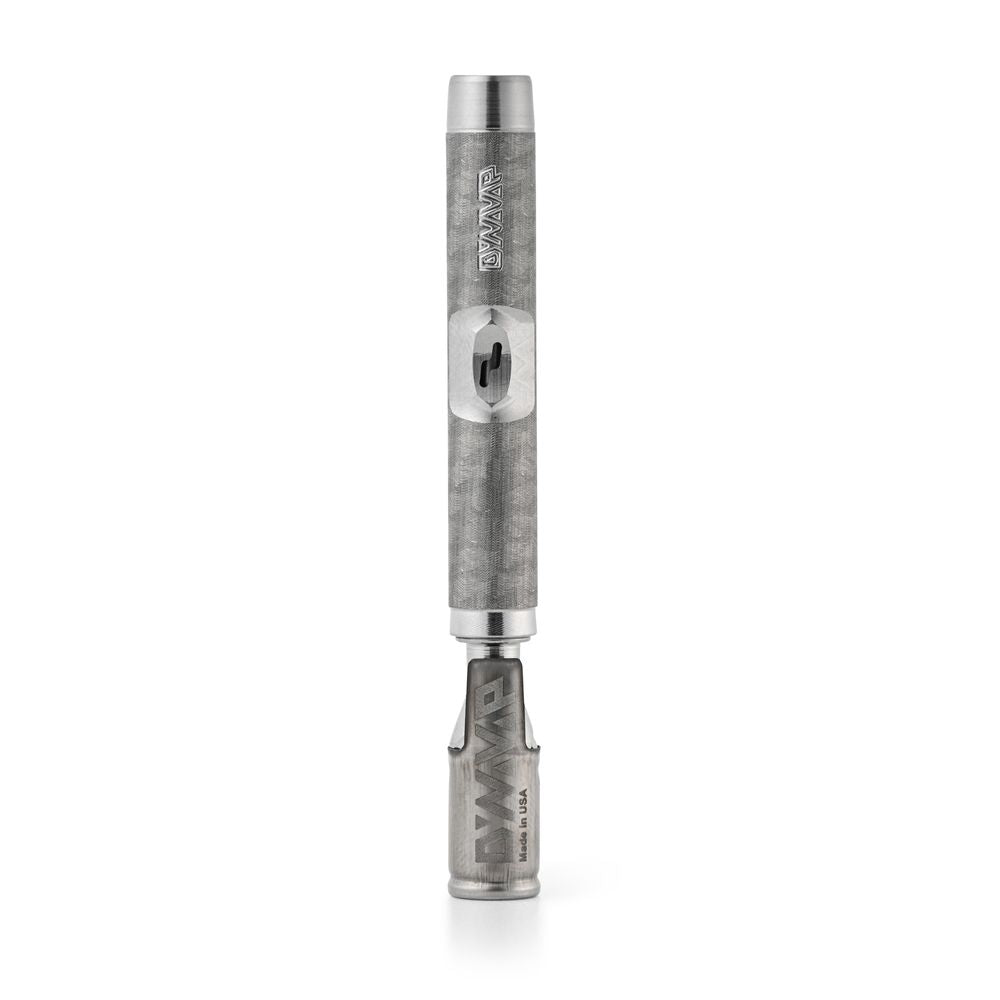
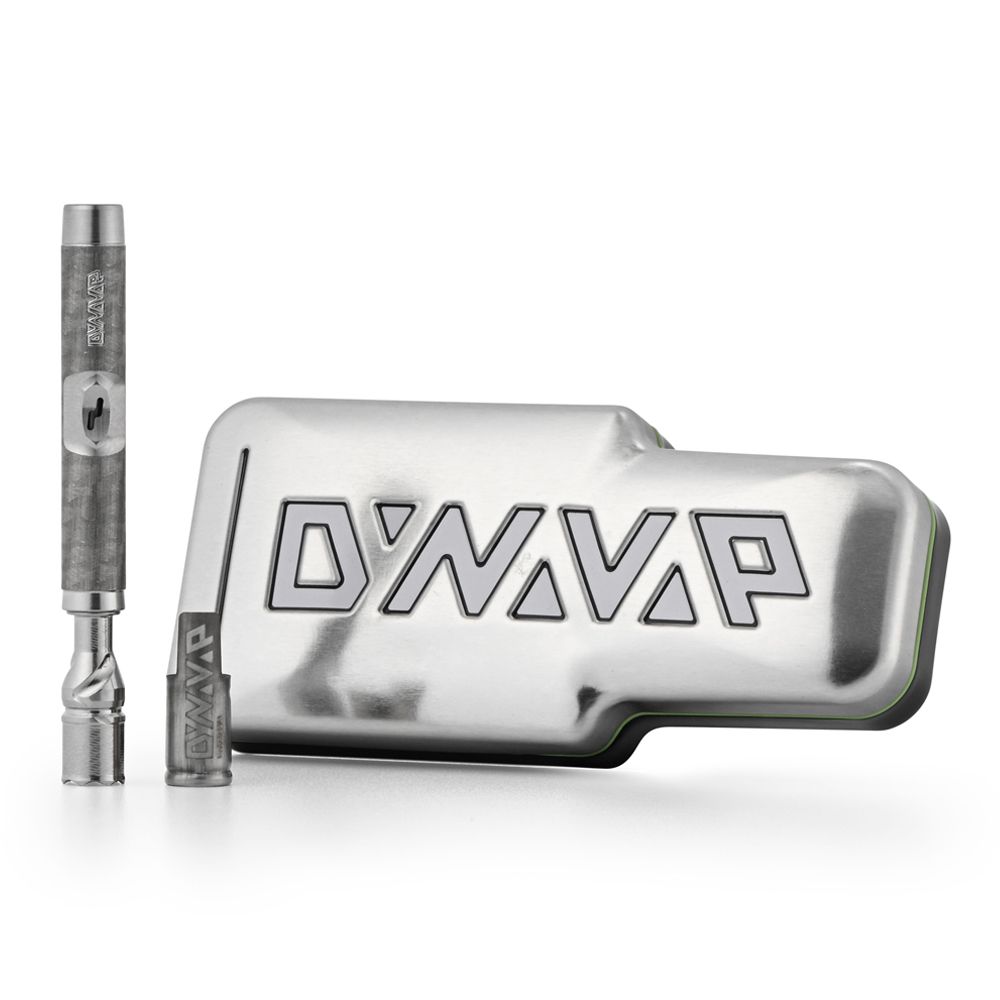
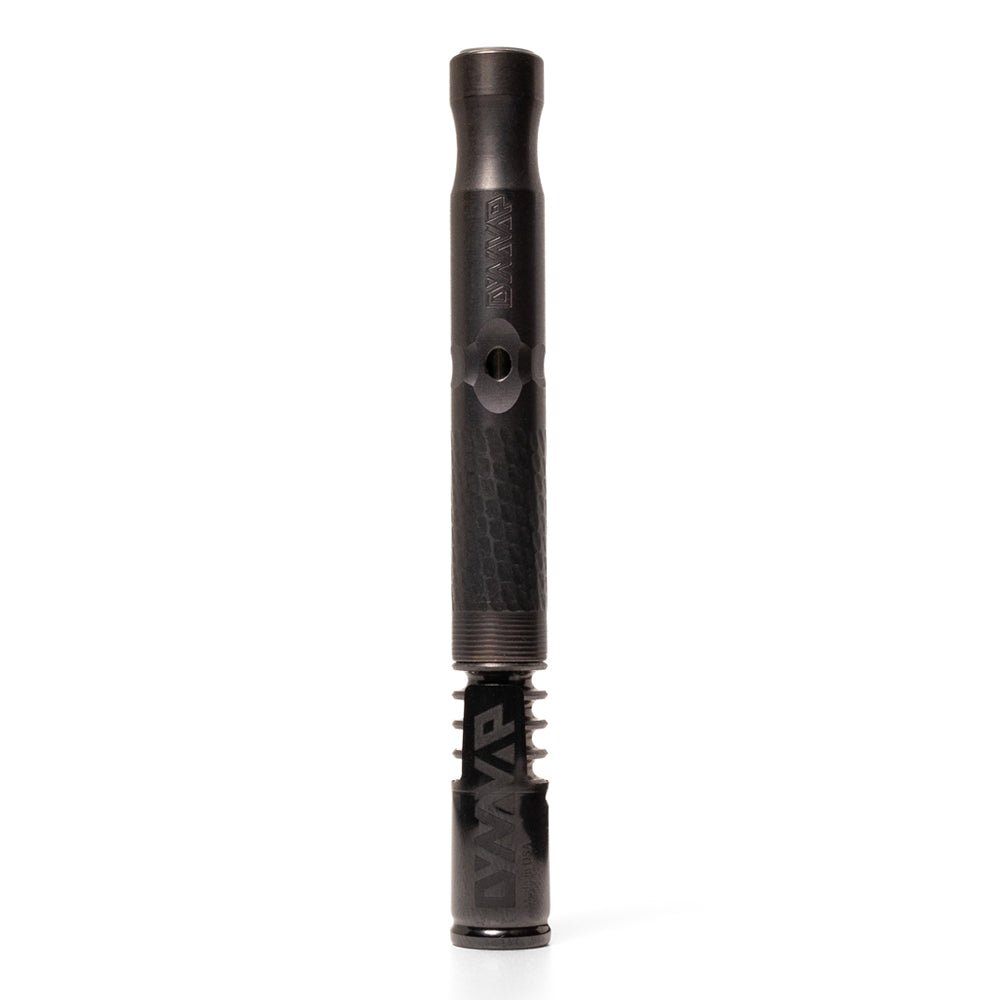
The M 7 transitions into full medical-grade stainless steel construction. At $89, it includes the device, a DynaTorch single-flame torch, and a tin case. Every component is stainless steel and is manufactured in the USA.
The M is fully modular with all DynaVap parts, so when a component wears, you replace just that part.
According to Future Market Insights dry herb vaporizers market analysis, the dry herb vaporizer market is projected to grow from USD 3.4 billion in 2025 to USD 13.2 billion by 2035, driven by durable, customizable devices like the M 7.
Best for: Users who want stainless steel durability at the entry-level price point and plan to build on their setup over time.
Pros:
- Full medical-grade stainless steel construction
- Includes torch and case at $89
- Fully modular, every component is replaceable
- Compatible with all DynaVap tips and accessories
Manual Vaporizer Heating Techniques That Get Results
Most people who struggle with manual vaporizers aren't dealing with a device problem. The technique is the variable. A DynaVap device heated correctly will produce clean, flavorful vapor every time. Heated incorrectly, it scorches.
Torch Positioning and Heat Cycle Timing
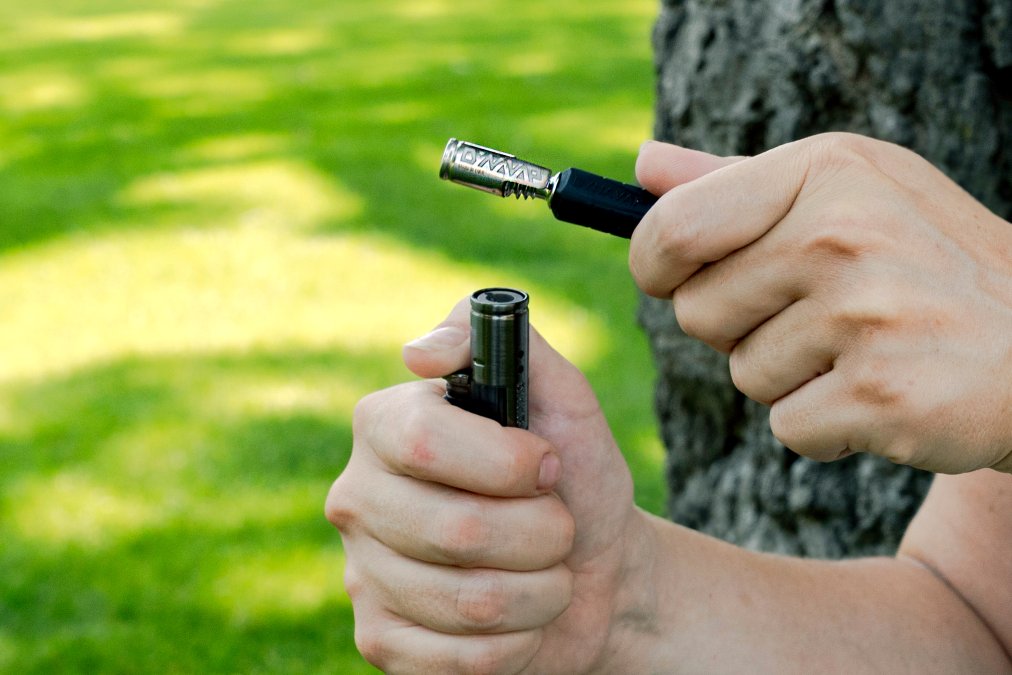
The correct torch position is the lower third of the cap, not the tip. Applying heat directly to the tip concentrates temperature at the chamber and risks combustion. Heating the lower cap allows thermal energy to distribute upward before reaching the herb.
Hold the torch at roughly 45 degrees, 2-3 centimeters from the cap surface. Rotate the device slowly and continuously, one full rotation every 2-3 seconds. The click should arrive in 5-7 seconds with a single-flame torch. After the click, cap the torch immediately. The click signals that the cap has reached optimal vaporization temperature.
Close-up of a person's hands holding a DynaVap B2 device between thumb and forefinger, a single-flame butane torch angled at 45 degrees toward the lower cap from below, soft natural light, wooden surface background
Conduction vs. Convection: What Changes at the Cap
Conduction heating is the transfer of heat through direct contact between a hot surface and the herb material. In a DynaVap device, conduction occurs when the heated tip wall contacts the packed herb directly. It's fast and efficient, but placement and packing density matter.
Convection heating occurs when hot air drawn through the device passes over and through the herb. DynaVap devices produce convection heating during the draw itself; inhaling pulls hot air across the herb in the chamber, contributing to extraction alongside conduction.
For the G3 and BB3's smaller chambers, a medium-fine grind with a loose pack tends to produce the most consistent results. For the M 7’s larger chamber, a medium grind with a slightly firmer pack maximizes single-cycle extraction capability.
The draw speed affects the heating ratio. Slow draws restrict airflow and increase conduction dominance, producing denser, warmer vapor. Medium draws balance conduction and convection, the sweet spot for most users. Fast draws maximize convection, producing cooler, lighter vapor with more even extraction.
Long-Term Cost of Ownership and Sustainability
The price-per-session math on manual vaporizers favors them significantly over battery-powered alternatives. A $35-$89 DynaVap device with no electronics has no battery to degrade, no firmware to update, and no proprietary charging cable to lose.
The maintenance routine is straightforward. Disassemble the device, soak metal components in isopropanol for 20-30 minutes, rinse with warm water, and dry before reassembly. The CCD screen should be cleaned every 5-10 sessions. O-rings should be inspected monthly and replaced as needed. Replacement parts cost a few dollars and are available directly from DynaVap.
Butane torches are inexpensive and refillable, which keeps ongoing costs low. DynaVap has sold over one million devices into 145 countries, a number that reflects both the durability of the design and the size of the community built around it. Devices from 2017 are still in active daily use.
The dry herb vaporizer market is shifting toward exactly what battery-free thermal extraction devices have always offered: efficiency, flavor, and hardware that doesn't become obsolete. DynaVap's lineup from $35 to $89 covers every entry point in the budget manual vaporizer category, with the M 7 standing as the top recommendation for most users and the G3 as the most accessible starting point for anyone new to torch-powered extraction. Every device ships with a 90-day money-back guarantee. Shop all DynaVap collections to find the right fit for your session style.
Frequently Asked Questions
How much does a decent dry herb vaporizer cost?
A fully functional dry herb vaporizer starts at $35 for a torch-powered manual device like the DynaVap G3, which ships with a torch and tin case. Battery-powered options typically start around $60-$80 but add ongoing charging costs. Manual thermal extraction devices offer the lowest entry price and no recurring hardware expenses, making them the most cost-efficient choice for budget-conscious buyers.
How do manual thermal extraction devices compare to battery-powered vapes?
Manual vaporizers use a torch or lighter to heat the cap instead of an internal battery. They heat up in 5-7 seconds, never need charging, and have fewer parts that can fail. Battery-powered devices offer push-button convenience but cost more upfront, require regular charging, and eventually need battery replacement. For outdoor use or travel, manual devices are lighter and more reliable since they have no electronics to malfunction.
How do you use a manual vaporizer without scorching your herbs?
The key is torch placement and listening for the click. Hold the flame at the base of the cap and rotate the device slowly so heat distributes evenly. Stop heating the moment you hear the audible click from the Captive Cap — that signals optimal vaporization temperature. Heating past the second click risks combustion. Using a single-flame torch rather than a multi-flame torch gives you more control and reduces the chance of overshooting temperature.
Are budget-friendly manual vaporizers worth the investment?
For most dry herb users, yes. A $35-$89 manual vaporizer built from stainless steel or glass will outlast multiple disposable or budget electronic devices. DynaVap devices are modular, so individual parts can be replaced rather than discarding the whole unit. Combined with the efficiency gain from vaporizing versus combustion — using less than 50% of the material for comparable results — the device typically pays for itself within a few months of regular use.
What is the best affordable manual dry herb vaporizer for beginners?
The DynaVap G3 at $35 is the most accessible starting point, coming bundled with a torch and tin case. For beginners who want a more durable build, the B2 at $59 offers a silicone stem for comfortable handling and a larger 0.075g bowl. Both use the same Captive Cap click system, so the learning curve is identical. Either device can be upgraded with new tips and stems as your technique improves.
This article was written using GrandRanker