

Table of Contents
- How We Evaluated the Best Dry Herb Vaporizer Options
- Quick Comparison: Best Dry Herb Vaporizers at a Glance
- Why a Battery-Free Dry Herb Vaporizer Deserves Serious Consideration
- Best for Flavor: Terpene Preservation and Vapor Quality
- Best for Beginners: Low Learning Curve, High Reward
- Dry Herb Vaporizer Efficiency Tips to Stretch Your Stash
- How to Clean a Dry Herb Vaporizer: Step-by-Step
- Sustainability, Repairability, and Device Longevity
- Frequently Asked Questions
Last Updated: August 28, 2026
The dry herb vaporizer market is crowded, and finding what actually works is harder than it should be. At DynaVap, we've spent years engineering thermal extraction devices from the ground up, which means we know exactly what separates a device built to last from one that ends up in a drawer. This guide covers the best dry herb vaporizer 2026 options across every use case: flavor chasers, beginners, efficiency-obsessed users, and anyone tired of replacing batteries every year.
Here's what most guides get wrong: they treat every vaporizer as a battery-powered gadget problem. The most compelling advances in dry herb vaporizer technology have nothing to do with batteries at all.
Quick Picks:
- Best Overall: DynaVap thermal extraction device, battery-free, lifetime build quality, rated 4.7/5 from 10,000+ reviews
- Best for Flavor: Convection-first devices with isolated vapor paths and ceramic heating elements
- Best for Beginners: Session-mode portables with auto-shutoff and minimal setup
- Best Budget Option: Battery-free torch-heated devices that cost a fraction of electronic alternatives
How We Evaluated the Best Dry Herb Vaporizer Options
Evaluating a dry herb vaporizer properly means going beyond spec sheets. The criteria that actually matter are heating method, vapor quality, build quality, ergonomics, herb efficiency, and long-term repairability.
Heating Method: Convection, Conduction, and Hybrid
Convection heating passes hot air through the herb chamber without direct contact between the heat source and material. It preserves terpene profiles better, produces cleaner vapor, and reduces scorching risk. The tradeoff is longer heat-up time and higher engineering complexity.
Conduction heating places the herb directly against a heated surface, typically stainless steel or ceramic. Heat-up is faster, but uneven extraction and combustion risk increase if temperature precision slips.
Hybrid heating combines both methods, using conduction for quick heat-up and convection airflow for complete extraction. Many top-performing portables use this approach to balance speed with flavor quality.
For terpene preservation, convection wins. For simplicity and faster sessions, conduction or hybrid designs work well.
Build Quality, Ergonomics, and Long-Term Durability
A vaporizer's build quality determines whether it's a six-month purchase or a lifetime tool. Look for isolated airpath construction, glass or stainless steel mouthpieces, chamber capacity matching your typical session size, and draw resistance suited to your inhale style.
Ergonomics matter more than most reviews acknowledge. A device that's uncomfortable to hold during a full session gets used less. Weight distribution, grip texture, and mouthpiece angle all factor into real-world usability.
Quick Comparison: Best Dry Herb Vaporizers at a Glance
Device Type |
Heating Method |
Battery Required |
Best For |
Heat-Up Time |
|---|---|---|---|---|
DynaVap thermal device |
Conduction/convection |
No (torch or induction) |
Flavor, efficiency, portability |
5-10 seconds |
Session-mode portable |
Conduction or hybrid |
Yes (lithium-ion) |
Beginners, hands-free use |
20-45 seconds |
On-demand portable |
Convection |
Yes (lithium-ion) |
Flavor chasers, microdosing |
3-8 seconds |
Desktop unit |
Full convection |
Yes (wall power) |
Home use, vapor density, groups |
1-3 minutes |
Concentrate-compatible |
Conduction |
Yes (lithium-ion) |
Dual-use, versatility |
15-30 seconds |
Why a Battery-Free Dry Herb Vaporizer Deserves Serious Consideration
Most vaporizer reviews skip this category entirely. That's a mistake.
A battery-free dry herb vaporizer operates through thermal extraction using a butane torch or induction heater rather than a lithium-ion battery. No battery means no charging cycles, no capacity degradation over time, and no dead device when you need it most.

DynaVap devices are engineered around this principle. Rated 4.7/5 from over 10,000 reviews and sold into 145 countries, the devices are designed and manufactured in-house in the USA. The practical result: a vaporizer that can last decades with basic maintenance and works anywhere, no outlet or power bank required.
For travelers, the calculus is straightforward. A metal thermal extraction device with no battery, no electronics, and no moving parts clears customs and survives checked baggage in ways complex electronic devices do not. The torch is a separate item, easily replaced at any gas station worldwide.
Torch vs. Induction Heating: Which Is Right for You?
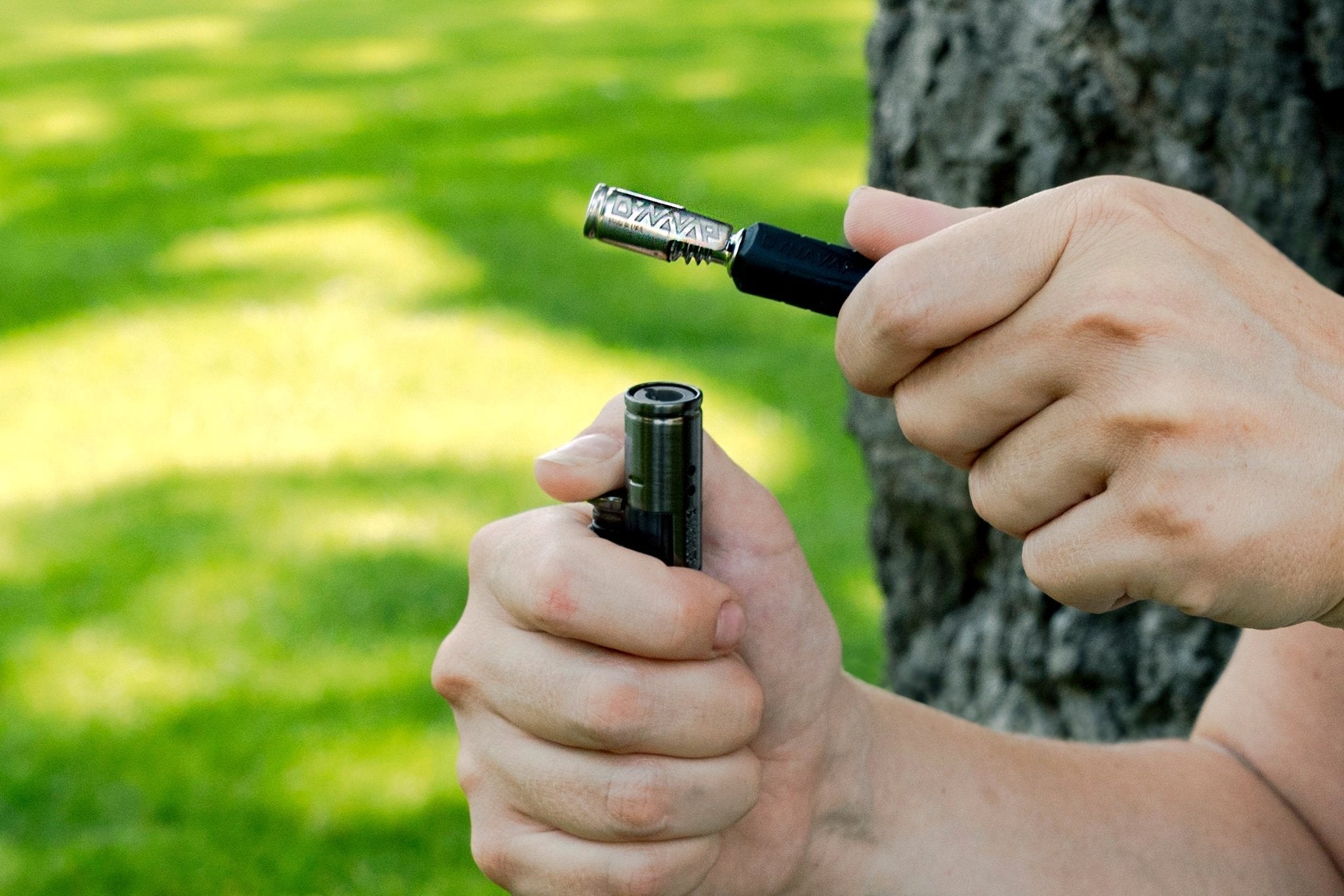
Torch heating uses a butane flame applied to the device's tip. The user controls heat-up time by feel and the device's audible click, haptic feedback built into the physics of the cap itself. Learning this technique takes a few sessions. Once learned, it's faster than many battery-powered devices.
Induction heating uses an electromagnetic coil to heat a ferromagnetic element inside the device. Heat-up time is consistent, hands-free, and repeatable. It removes the learning curve entirely but requires purchasing and charging an additional component.
For users who prefer simplicity and consistency, induction is the answer. For users who value portability above everything else, torch is unbeatable. Both deliver the same combustion-free extraction and flavor quality.
Best for Flavor: Terpene Preservation and Vapor Quality
Flavor quality comes down to three variables: temperature precision, vapor path materials, and airflow resistance.
Terpenes, the aromatic compounds responsible for flavor and effect, degrade above certain temperatures. Devices that allow precise temperature control let users dial into the range where terpene preservation is highest. Convection heating through ceramic or isolated stainless steel vapor paths produces noticeably cleaner flavor than conduction-heavy designs.
According to research on terpene volatilization temperatures published by the American Chemical Society, different terpene compounds have distinct volatilization points, meaning temperature precision directly determines which compounds you extract.
The vapor path matters as much as the heat source. Plastic introduces off-flavors. Glass and stainless steel are neutral. An isolated airpath, where air never contacts electronics, solder, or adhesives, is the standard to look for.
DynaVap devices use a stainless steel vapor path by design, producing clean, terpene-forward draws.
Best for Beginners: Low Learning Curve, High Reward
The biggest mistake beginners make is buying a device with too many settings. Session-mode portables with auto-shutoff and a single temperature setting are genuinely easier to start with than on-demand devices or torch-heated options.
A good beginner dry herb vaporizer should offer auto-shutoff, a chamber capacity large enough to forgive inconsistent packing, minimal draw resistance, and firmware updates that don't require technical knowledge.
The learning curve for torch-heated devices is shorter than most reviews suggest. The DynaVap system uses an audible click to signal when extraction temperature is reached, a clear, repeatable cue that removes guesswork. Most new users get comfortable within three to five sessions.
If you genuinely do not want to think about technique, a session-mode battery device with one button is the path of least resistance. If you're willing to invest a few sessions in learning, a battery-free thermal device delivers better efficiency and flavor from the start.
As documented in vaporization research from NORML's educational resources, vaporization consistently produces a different experience profile than combustion, with users reporting cleaner taste and better material efficiency.
Dry Herb Vaporizer Efficiency Tips to Stretch Your Stash
Herb efficiency is the most underrated metric in vaporizer reviews. A device that extracts more from less material pays for itself quickly.
These tips apply across all device types:
- Grind consistently, not too fine. An even, medium grind maximizes surface area without creating airflow blockage.
- Pack the chamber loosely. Overpacking restricts airflow and creates uneven extraction.
- Use the full temperature range. Starting low and finishing high extracts different compound profiles across a session.
- Save your already-vaped herb (AVB). Material that has been through a vaporizer still contains compounds. Many users recycle AVB in edibles or capsules.
- Clean regularly. Resin buildup restricts airflow and degrades flavor.
DynaVap devices are engineered to stretch herb stash up to 3X compared to combustion methods. The small chamber size forces precision packing and prevents waste.
Efficiency Factor |
Impact |
Fix |
|---|---|---|
Grind consistency |
High |
Use a quality two-piece or four-piece grinder |
Chamber packing |
High |
Loose, level pack, no compression |
Temperature range |
Medium |
Start low, finish high each session |
Device cleanliness |
High |
Clean vapor path and chamber after every 5-10 sessions |
AVB recycling |
Medium |
Collect and store for secondary use |
How to Clean a Dry Herb Vaporizer: Step-by-Step
A clean dry herb vaporizer performs better, tastes better, and lasts longer. Clean the chamber and vapor path every 5-10 sessions for most devices. High-frequency users should clean after every 3-5 sessions.
What you need:
- Isopropyl alcohol (90% or higher concentration)
- Cotton swabs
- A small, stiff-bristled brush (pipe cleaners work well)
- A small dish for soaking components
Step-by-step process:
- Allow the device to cool completely before disassembly.
- Remove the mouthpiece and disassemble to individual components.
- Soak metal and glass components in isopropyl alcohol for 10-20 minutes to dissolve resin buildup.
- Use a cotton swab dampened with isopropyl alcohol to clean the chamber walls, focusing on corners and edges.
- Run a pipe cleaner through the vapor path from mouthpiece to chamber.
- Rinse all soaked components with warm water and allow to dry completely before reassembly.
- Reassemble and run a brief heat cycle without herb to burn off any remaining alcohol residue.
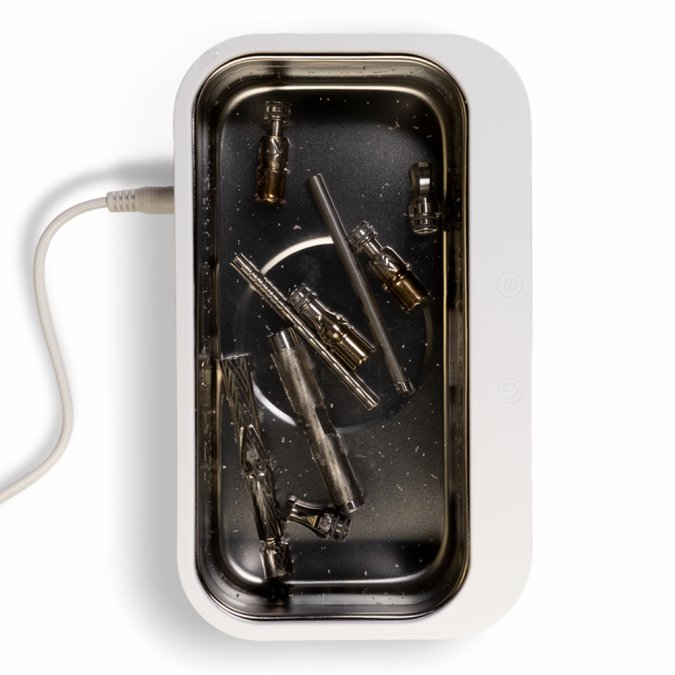
For DynaVap devices specifically, the simple disassembly design means the entire device can be cleaned in under five minutes. There are no electronic components to protect from moisture and no proprietary cleaning tools required.
Sustainability, Repairability, and Device Longevity
Most vaporizer reviews ignore repairability entirely. This is a significant omission.
A device built from replaceable, individually available components has a fundamentally different environmental footprint than one that becomes landfill when a single part fails. The EPA's guidance on electronics waste and consumer product sustainability identifies electronics with non-replaceable batteries as a primary contributor to e-waste.
Battery-powered devices have a predictable lifespan tied to their lithium-ion cell. Most lithium-ion batteries reach end-of-useful-life after 300-500 charge cycles. When that battery is non-removable, the device becomes waste.
A battery-free thermal extraction device has no such constraint. The components that wear are mechanical: O-rings, the tip, the cap. These are individually replaceable at low cost. The device's core structure, typically machined stainless steel or titanium, does not degrade.
DynaVap devices are built to last a lifetime. Every component is available individually, and the modular design means users can upgrade, replace, or repair without purchasing a new device. One device that lasts 20 years with periodic component replacement produces a fraction of the waste of replacing a battery-powered device every two to three years.
For users who want to go deeper on the science of vaporization and thermal extraction, peer-reviewed research on cannabis vaporization efficacy from the journal Drug and Alcohol Dependence provides detailed analysis of how different heating methods affect compound extraction and user experience.
Choosing the right dry herb vaporizer comes down to how you actually use it. If you want the most efficient, flavorful, and sustainable option available, the case for a battery-free thermal extraction device is stronger than most guides acknowledge. DynaVap devices are engineered for exactly this: combustion-free extraction, lifetime durability, and the kind of herb efficiency that makes the device pay for itself. Explore the full range and find the device that fits your session style at DynaVap's SHOP ALL COLLECTIONS.
Frequently Asked Questions
Q: Do dry herb vaporizers really help conserve herb?
A: Yes. A well-calibrated dry herb vaporizer extracts active compounds at lower temperatures than combustion, which means less material is wasted as smoke or ash. Thermal extraction devices like DynaVap are designed to stretch a stash up to 3X compared to traditional methods. The key is packing the chamber correctly, using the right temperature, and not over-drawing — habits that take only a session or two to develop.
Q: Which dry herb vaporizer offers the best flavor profile?
A: Flavor quality depends on terpene preservation, which requires precise temperature control and an isolated vapor path. Convection and hybrid heating methods generally produce cleaner, more aromatic vapor than straight conduction because herb is not sitting on a hot surface between draws. Devices with stainless steel or ceramic heating elements and glass or stainless vapor paths tend to deliver accurate, untainted flavor. Check the mouthpiece material too — plastic can affect taste at higher temperatures.
Q: Are battery-free vaporizers more durable than electronic models?
A: Generally, yes. Battery-free dry herb vaporizers have far fewer failure points: no lithium-ion battery to degrade, no circuit board to short, and no firmware to update. A well-built metal device can last years — or decades — with basic maintenance. Electronic portables typically see battery capacity drop after 300-500 charge cycles. If longevity and reliability matter to you, a battery-free thermal extraction device is worth the learning curve.
Q: How do I choose the right dry herb vaporizer for my lifestyle?
A: Start with three questions: Where will you use it most? How much maintenance are you willing to do? And what matters more — convenience or control? Heavy travelers benefit from compact, battery-free devices that clear TSA without charging cables. Home users may prefer a desktop unit with pass-through charging and a larger chamber capacity. Beginners should prioritize simple operation and easy cleaning. Budget-focused buyers should factor in long-term herb savings, not just the upfront price.
Q: What are the benefits of thermal extraction over combustion?
A: Combustion burns herb at temperatures above 450°F, destroying terpenes and producing byproducts that include carbon monoxide and particulates. Thermal extraction operates at lower temperatures — typically 315°F to 430°F — which vaporizes active compounds without burning plant material. The result is a cleaner vapor with a more distinct flavor profile, less odor, and more efficient use of your herb. Most users also report that already-vaped material can be repurposed, adding further value.
This article was written using GrandRanker