

Table of Contents
- What Combustion Free Vaping Actually Means
- The Dry Herb Vaporizer Benefits That Matter Most
- How to Use a Torch with a Vaporizer
- Induction Heater Advantages for Consistent Results
- Cleaning Your Thermal Extraction Device
- Troubleshooting the Transition Phase
- Frequently Asked Questions
Last Updated: September 14, 2026
What Combustion Free Vaping Actually Means
Combustion free vaping is the practice of heating dry herb until it releases vapor instead of setting it on fire. According to Action on Smoking and Health's adult perception survey, only 29% of adults correctly believe that vapes are less harmful than tobacco cigarettes, which tells you how much confusion still surrounds this category. This guide from DynaVap breaks down why so many people are making the switch, and what changes when you stop burning your herb.
The difference comes down to one word: burning.
Thermal Extraction vs. Burning
Thermal extraction is the process of applying heat to plant material so the active compounds release as vapor without igniting the plant itself. Burning does the opposite. When you combust dry herb, you're creating a chemical byproduct cocktail that includes tar and carbon monoxide, neither of which shows up in vapor (pubmed.ncbi.nlm.nih.gov). Our World in Data's research on combustion documents how replacing combustible tobacco with combustion-free methods cuts exposure to thousands of carcinogenic chemicals tied to burning plant material.
That's the whole argument in one sentence. No flame, no tar, no carbon monoxide.
The Dry Herb Vaporizer Benefits That Matter Most
The dry herb vaporizer benefits people notice first are flavor, efficiency, and cost. When you stop burning material, you stop destroying the compounds that give your herb its character. The vapor tastes like the plant, not like smoke.
Flavor, Efficiency, and Cost Savings
Flavor is the easy sell. Efficiency is the one that changes your routine.
Here's the mechanism most guides skip: combustion is an all-at-once event. The flame consumes the entire load whether you're ready for it or not, and a big share of the active compounds literally goes up in smoke between draws. Thermal extraction is a gradual release. You apply heat, the compounds vaporize in stages, and you can stop whenever the load is spent. Nothing is destroyed just because it was sitting in the bowl.
That's why users can stretch their stash up to 3X compared to smoking, according to DynaVap's efficiency data. It isn't magic, it's just less waste per session.
Here's a quick look at what changes when you drop combustion:
| Factor | Combustion | Thermal Extraction |
|---|---|---|
| Tar exposure | High | None from burning |
| Carbon monoxide | Present | Avoided |
| Flavor | Smoke-forward | Herb-forward |
| Material used per session | More | Up to 3X less |
| Long-term cost | Higher | Lower |
What the Cost Curve Actually Looks Like
Most comparisons stop at "it's cheaper." The more useful framing is when it gets cheaper.
- Week one: you're learning technique, and you'll probably use a bit more material than you will later. This is normal.
- Weeks two through four: your pack gets dialed in. The standard tip on most devices is a regular size in the 0.1g range, and that's plenty for a session, most people are surprised how far it goes.
- Month two onward: the efficiency compounds. Because you're reloading less often, the same amount of herb lasts noticeably longer than it did when you were combusting.
The device itself is a one-time purchase with no ongoing consumable cost beyond your herb and torch fuel. That's the part the budget math usually misses: there's no cartridge, no pod, no coil to replace. A well-kept device just keeps working.
The Benefits You Feel Day to Day
Beyond the budget, the day-to-day differences are what keep people on the combustion-free side:
- Cleaner flavor, you taste the herb, not the char.
- Less residue, no tar coating your tongue and throat after a session.
- More control, you decide when the session ends, not the flame.
- A ritual that feels deliberate, loading, heating, waiting for the click, drawing. It's slower in a good way.
For a budget-conscious user, the pitch is simple: less material per session, better flavor, no tar, and a device that doesn't ask you to buy anything disposable.
How to Use a Torch with a Vaporizer
Using a torch with a vaporizer means heating the cap evenly until it clicks once, then drawing. That single click is your signal to stop heating. There is only 1 click during heat up and only 1 click during cool down, so you don't have to count or guess.

Steps to get it right:
- Load your herb loosely into the tip
- Aim the torch at the cap, rotating the device
- Stop the moment you hear the click
- Draw slowly, then wait for the cool-down click
- Reload and repeat
A common mistake is overpacking the tip. The standard tip on most devices is a regular size in the 0.1g range, and that's plenty.
Induction Heater Advantages for Consistent Results
The main induction heater advantages are consistency and hands-free heating. Instead of rotating a device over a flame, you drop it into the heater and wait for the click. Induction heaters do use a battery, so they're not battery-free the way torch heating is, but they remove the technique variable entirely.
For anyone who struggled with torch timing, an induction heater flattens the learning curve. The heat is even, the click still tells you when to stop, and you get the same result every time.
Cleaning Your Thermal Extraction Device
Cleaning your thermal extraction device takes a few minutes and keeps flavor sharp. Wipe down the cap only, never soak it. Soaking the cap can damage the internal components that produce the click, and once that's gone, you lose your only heating signal.
For the rest of the device, disassemble what comes apart, wipe the surfaces, and clear any buildup from the tip and condenser. A clean device tastes better and hits more consistently.
Troubleshooting the Transition Phase
Troubleshooting the transition phase usually comes down to three things: heating too long, packing too tight, or drawing too fast. Fix those and most complaints disappear.
But the mechanical fixes are the easy part. What most guides miss is that the first 30 days are a behavioral transition as much as a hardware one, and that's where people actually struggle.
The Habit Loop Nobody Talks About
Smoking isn't just a delivery method. It's a ritual: the reach for the pack, the flick of the lighter, the pause, the exhale. Your brain has wired all of those steps together into a single loop, and removing the loop entirely leaves a gap that feels bigger than the chemistry alone would suggest.
Combustion-free devices actually fit this loop well, because they have a ritual. Holding the device, loading the tip, heating the cap, waiting for the click, drawing slowly, that's a hands-on sequence that fills the same space the old one did. The click gives you a natural endpoint, the same way finishing a cigarette did.
A common pattern is that people who keep the ritual but change the delivery method adjust faster than people who try to quit the routine cold. You're not removing the habit. You're replacing the middle of it.
What the First 30 Days Actually Feel Like
Expect a short adjustment window. A few things that come up:
- The first few sessions feel lighter than expected. That's normal, you're not getting the same byproducts you were used to. Give it a week before you judge it.
- Flavor can taste muted for a few days. Your palate is recalibrating. It usually comes back sharper than before.
- You may reach for the device more often at first. That's the ritual reasserting itself. It settles down.
- Old cues still trigger the urge. Coffee, driving, a specific chair. The urge passes; the device gives you something to do with your hands while it does.
Common Fixes, Expanded
- Weak vapor: heat a little longer before the click, don't rush it. Rotate the device while you heat so the cap warms evenly.
- Harsh taste: you're likely scorching. Ease off the flame and keep it moving.
- Little vapor on the second draw: reload, the load is spent. This is the efficiency working as intended.
- Inconsistent results: switch to an induction heater. It removes the technique variable entirely, though it does use a battery.
- Click feels unpredictable: make sure the cap is clean. A wipe down is all it needs, never soak it, since that can damage the click mechanism.
Picking the Right Device for Where You Are
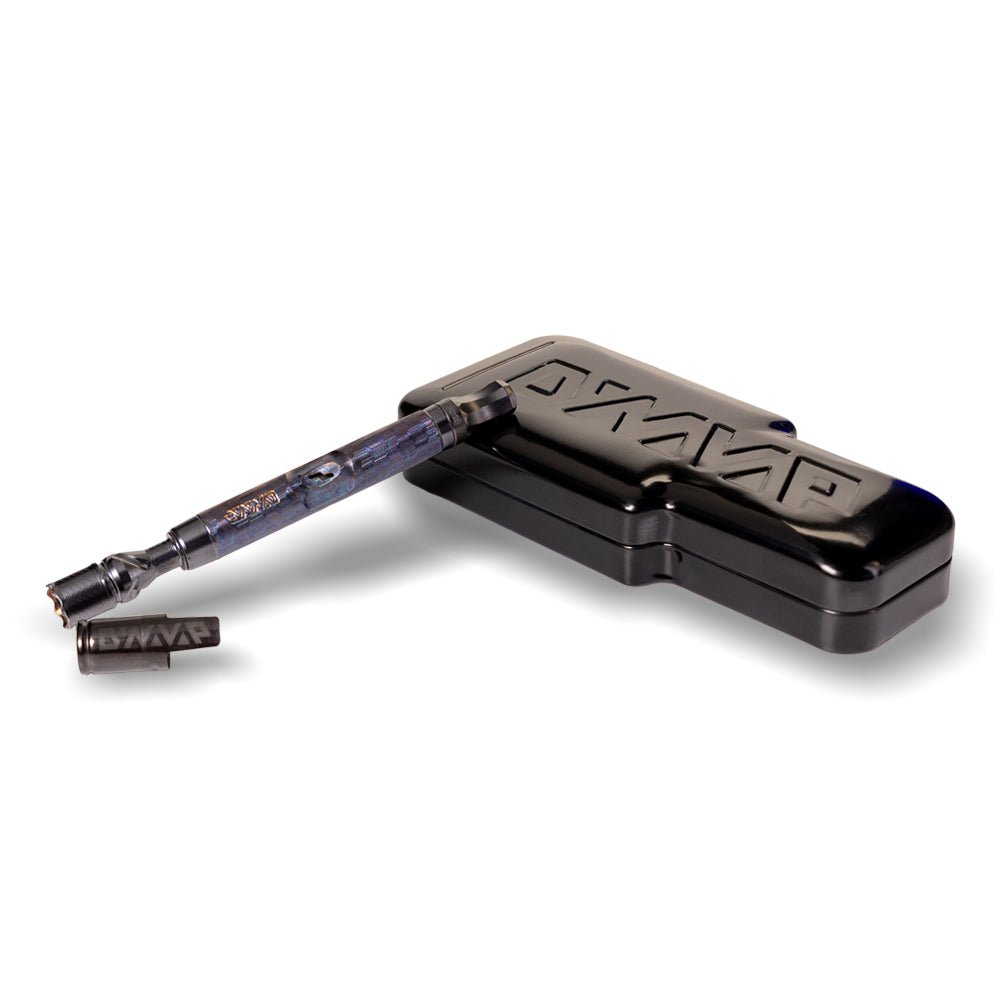
For new customers, the M 7 is a natural starting point. These are forgiving devices that reward a little practice without demanding it.
For returning customers, the Omni offers more control and refinement once you've got the basics down. If you already know how you like to consume, these let you fine-tune the experience rather than learn it from scratch.
Either way, the goal for the first month is consistency, not perfection. Get the ritual down, keep the cap clean, and let the efficiency do the rest.
Frequently Asked Questions
What does combustion-free vaping mean?
Combustion-free vaping means heating dry herb without burning it. Instead of producing smoke and ash, the device uses thermal extraction to release compounds as a vapor. This avoids tar and carbon monoxide, which are created when plant material burns. Devices like the M 7 use a torch or induction heater to reach the right level, with one click during heat-up and one click during cool-down. The result is a cleaner experience with better flavor and no ash.
Do I need a battery for combustion-free vaping?
No battery is required for torch-powered devices. You heat the cap with a butane torch, wait for the click, and inhale. If you prefer a more consistent experience, an induction heater works too, but note that induction heaters do use a battery. Both methods are combustion-free. The choice comes down to whether you want the ritual of a torch or the push-button ease of an induction heater. Many people start with a torch and add an induction heater later.
How do I maintain a combustion-free vaporizer?
Maintenance is simple. After each session, empty the tip while it's still warm. Use a wipe down for the cap, never soak it. For the rest of the device, a quick swab with isopropyl alcohol on a cotton swab keeps airflow clear. The standard tip on most devices holds a regular size load in the 0.1g range, so you're not cleaning large messes. A clean device delivers better flavor and consistent performance. Full cleaning takes just a few minutes.
Can switching to combustion-free methods help stretch my stash?
Yes. Thermal extraction is more efficient than burning because it doesn't destroy material through combustion. You use less herb per session and can often reuse already-vaped material for edibles. Many users report stretching their stash up to 3X compared to smoking. The exact savings depend on your tolerance and device. Starting with a smaller load in the 0.1g range helps you dial in the right amount without waste.